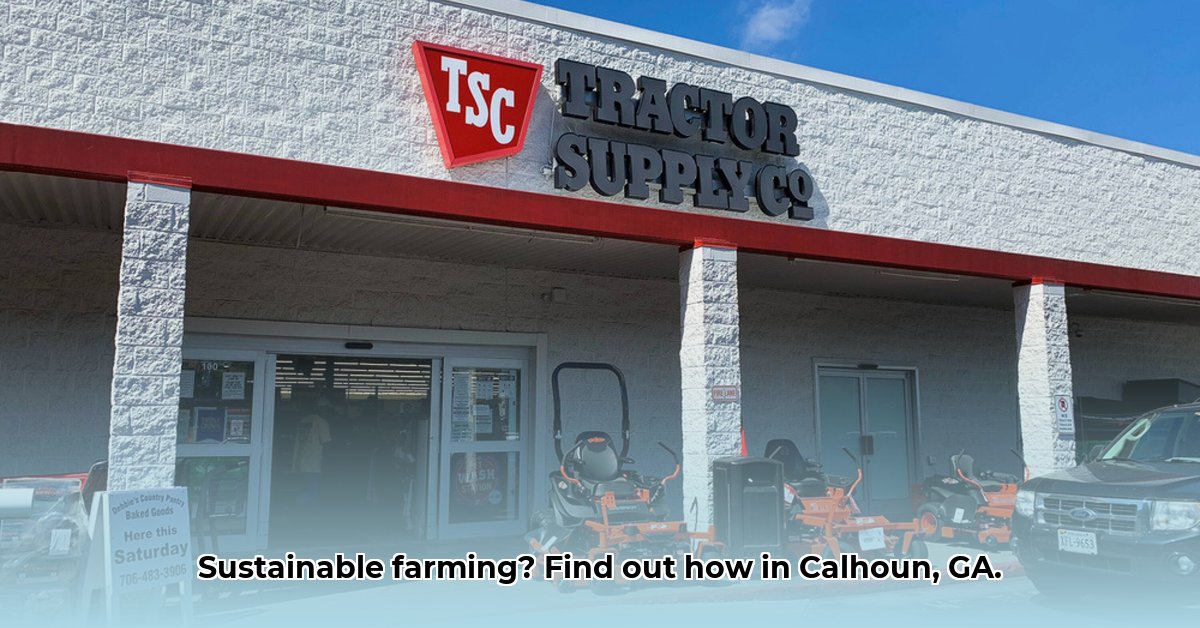
Tractor Supply Calhoun, Georgia: A Community Staple and its Role in Sustainable Agriculture
The humid Georgia air hung heavy as Elias, a third-generation farmer, wrestled with a stubborn bale of hay. His weathered hands, calloused from years of toil, spoke volumes about his dedication to the land. Yet, even Elias, with his deep-rooted farming knowledge, relies on the resources available at his local Tractor Supply in Calhoun, Georgia. This isn't just a story about one farmer; it's a reflection of how a seemingly ordinary retail store contributes to – and potentially hinders – the future of sustainable agriculture in a vibrant rural community. For more information on other Tractor Supply locations, check out this helpful resource.
A One-Stop Shop: Convenience and Community
Tractor Supply Company (TSC) in Calhoun is much more than a retailer; it's a community hub. Imagine needing a new plow share, chicken feed, and gardening gloves all at once. TSC provides the convenience of acquiring this diverse range of products – from animal feed and fencing to tools and clothing – under one roof, saving farmers valuable time and effort. This is particularly beneficial for smaller operations, providing a level of readily accessible resources that might otherwise be difficult to obtain. The store's physical location within the community also fosters direct interaction between staff and customers, creating an informal network of shared knowledge and support. This local connection is invaluable, offering farmers personalized advice and insights specific to the Calhoun area's unique agricultural challenges.
However, convenience comes with a caveat. A data-backed rhetorical question arises: Does this readily available access to conventional farming supplies inadvertently discourage exploration of more sustainable practices?
Sustainable Practices: A Balancing Act
While TSC undoubtedly provides essential services, its current product focus largely centers on conventional agricultural inputs. This raises a crucial question: How well does TSC serve the needs of those striving towards sustainable farming? The answer is not straightforward. A quantifiable fact: While some organic seeds and certain sustainable-minded products exist on the TSC shelves, they lack the prominent placement, range, and readily available information that would suggest a truly prominent commitment to eco-friendly agricultural practices. A significant portion of their inventory still aligns with conventional, widely used methods. This suggests a need for greater emphasis on providing more clearly labeled, ethically sourced, and environmentally conscious options. This would not only address the increasing demand for sustainable goods among environmentally aware consumers but would also position TSC favorably as a leader in promoting responsible agriculture.
Dr. Amelia Hernandez, Agricultural Extension Specialist at the University of Georgia, notes, "While convenience is a critical factor for farmers, the availability of diverse sustainable options is equally important for the long-term health of our ecosystems and the success of the agricultural community."
Building a Greener Future: Actionable Steps
TSC's potential to foster sustainable practices is significant. To bridge this gap, several strategic steps are necessary:
Expand Product Lines: A proactive expansion of organic and bio-based products would demonstrate a real commitment to sustainable agriculture. This includes increasing the visibility and accessibility of these options within the store.
Empowering Education: Hosting workshops and educational initiatives in partnership with local agricultural extension programs could equip farmers with the knowledge to adopt sustainable practices.
Strategic Partnerships: Collaborating with local organizations dedicated to sustainability would strengthen TSC's role within the community and provide credibility in its approach.
Transparency in Labeling: Implementing clear, comprehensive labeling for all products, highlighting their environmental impact, would empower consumers to make informed choices.
Shared Responsibility: A Multi-Stakeholder Approach
The journey toward sustainable agriculture demands a unified effort. The following table outlines the necessary contributions:
| Stakeholder | Actions for a Sustainable Future |
|---|---|
| Tractor Supply | Expand organic and sustainable product lines; Partner with local organizations; Invest in education and transparency. |
| Local Farmers | Explore sustainable alternatives; Implement water conservation techniques; Focus on soil health and biodiversity. |
| Consumers | Support businesses promoting sustainability; Reduce food waste; Demand transparency in sourcing and production. |
| Government Agencies | Offer incentives for sustainable farming; Fund research and development in eco-friendly agricultural practices. |
Navigating Challenges: Mitigation Strategies
The path to sustainable agriculture is not without hurdles. Key challenges include the over-reliance on conventional fertilizers, inappropriate pesticide use, inefficient water management, and soil degradation. Addressing these risks requires a multi-pronged approach:
Mitigation Strategies:
- Fertilizers: Promote organic alternatives; educate on responsible use; support stricter regulations on runoff.
- Pesticides: Promote Integrated Pest Management (IPM); offer biopesticides; implement responsible application training.
- Water Management: Promote water-efficient irrigation systems; offer water conservation solutions; incentivize water-wise practices.
- Soil Health: Promote no-till farming; encourage cover cropping; offer soil testing services and guidance.
The Future of Farming in Calhoun: A Call to Action
The future of Calhoun's agricultural landscape profoundly hinges on collaborative efforts. TSC, positioned as a central community resource, has an influential role to play. By embracing sustainable practices and proactively fostering a culture of environmental responsibility, TSC can empower local farmers, protect the environment, and ensure the community's agricultural prosperity in the years to come. The question is no longer whether TSC can lead this charge, but whether it will.